

Hyperion Robotics raises €6.4 million to bring physical AI to European infrastructure
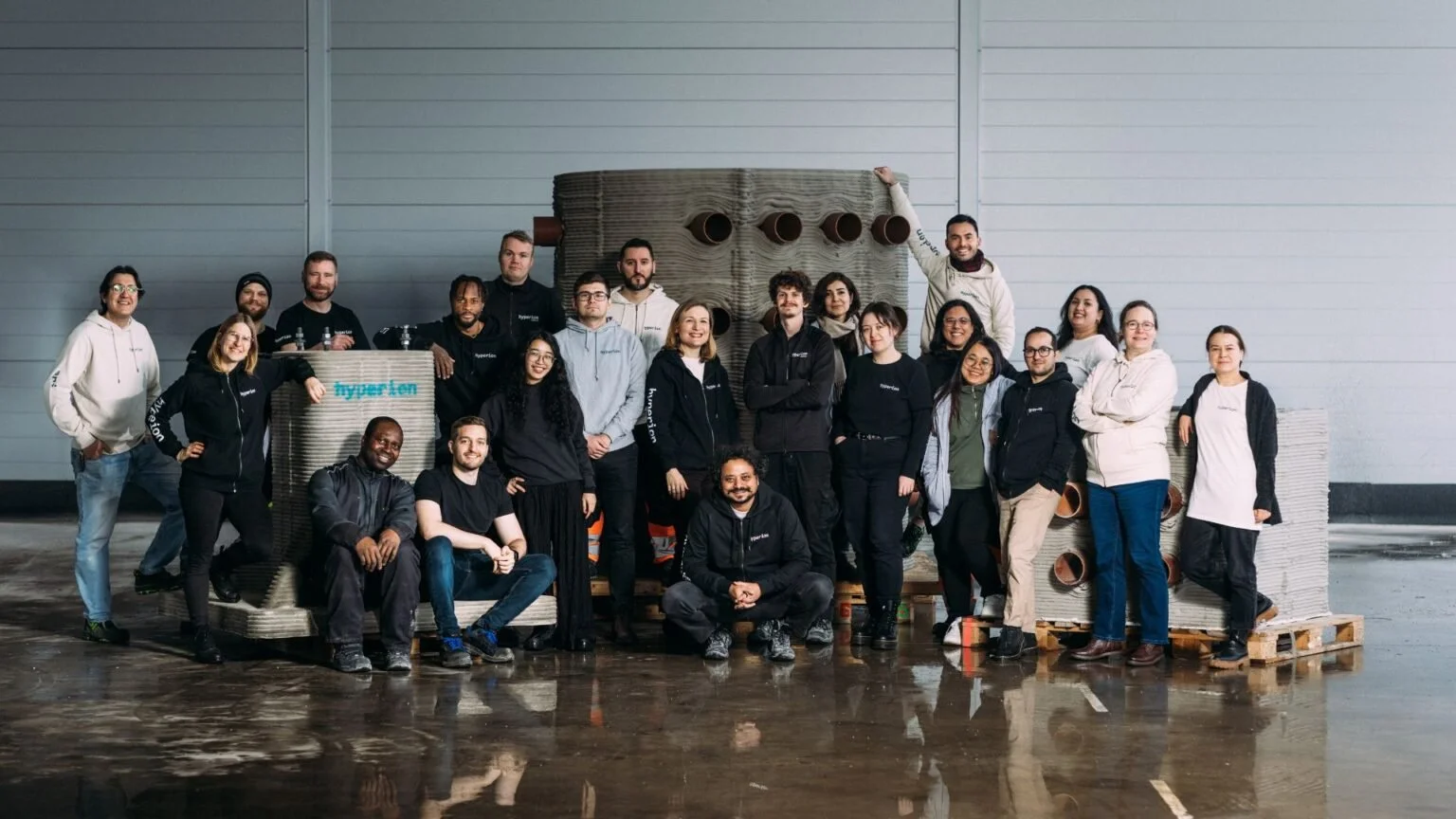
Hyperion Robotics, an Espoo-based physical AI company enabling the construction industry to build smarter, faster, and greener, today announced €6.4 million ($7.4 million) in growth funding to scale its robotic microfactories across Europe.
The round was co-led by Course Corrected and the European Innovation Council Fund (EIC Fund), with participation from RE Ventures (part of the Romande Energie Group) and existing investors Lifeline Ventures, Übermorgen Ventures and PC Rettig Impact & Co. The growth funding increases Hyperion’s total capital to nearly €17.4 million ($20 million) as it shifts from project-by-project delivery to industrial-scale production.
“We’ve already built some of the most efficient concrete structures in the world. With this funding, we start delivering at scale, in factories built next to the projects they serve. Europe doesn’t have the time, the budget or the labour for construction to keep working the way it has. Physical AI is how we close that gap,” said Fernando De los Rios, CEO of Hyperion Robotics.
Founded in 2020 by Fernando De los Rios, Ashish Mohite, and Henry Unterreiner, Hyperion Robotics states that it delivers low-carbon foundations that cost less, install faster and cut embodied carbon by up to 70%.
The company uses large-scale additive manufacturing and localised robotic microfactories to replace traditional, labour-intensive concrete processes with a cleaner, faster alternative. It claims to use up to 75% less material and to reduce programme times by up to 3x.
According to the Finnish startup, Europe is entering its largest infrastructure renewal cycle in decades. It further notes that power grids, water systems and industrial facilities built in the post-war decades now require unprecedented reinvestment, at the same time as demand is accelerating for new data centres, energy capacity and carbon capture infrastructure.
Amid labour shortages, budget constraints and decarbonisation pressures, Hyperion Robotics claims that its approach turns infrastructure into a digitally manufactured product rather than a one-off construction project, using up to 75% less material than traditional methods.
Compared to traditional methods, Hyperion highlighted that its robotic microfactories produce infrastructure components up to three times faster, cut costs by up to 50% and reduce CO₂ emissions by up to 70%.
The company is replacing labour-intensive construction with a factory-based model, deployed close to project sites to reduce logistics, speed up delivery and enable consistent, localised and more cost-efficient production for European infrastructure.
Hyperion’s approach is built on physical AI and uses a software platform called Forge that connects design, structural engineering, code compliance, robotics and factory operations into a single system.
Its first UK site, Forge I, will launch in Flixborough near Scunthorpe in partnership with LKAB. The facility will manufacture infrastructure components for sectors such as energy, utilities, water, data centres, and carbon capture.
“Hyperion is revolutionising the process of building infrastructure. Not only will they innovate concrete products, but they will do so in an environmentally sustainable way, all at lower costs. We believe they’re setting the standard for what comes next, doing for construction what the previous generation did for manufacturing,” said Katja Bergman, Managing Partner at Course Corrected.
The company plans to use this funding to support the launch of Forge I, further development of the Forge platform, and its expansion across European infrastructure markets. Its notable clients include National Grid, Costain, Mott MacDonald Bentley, Anglian Water and United Utilities.